Skip to content

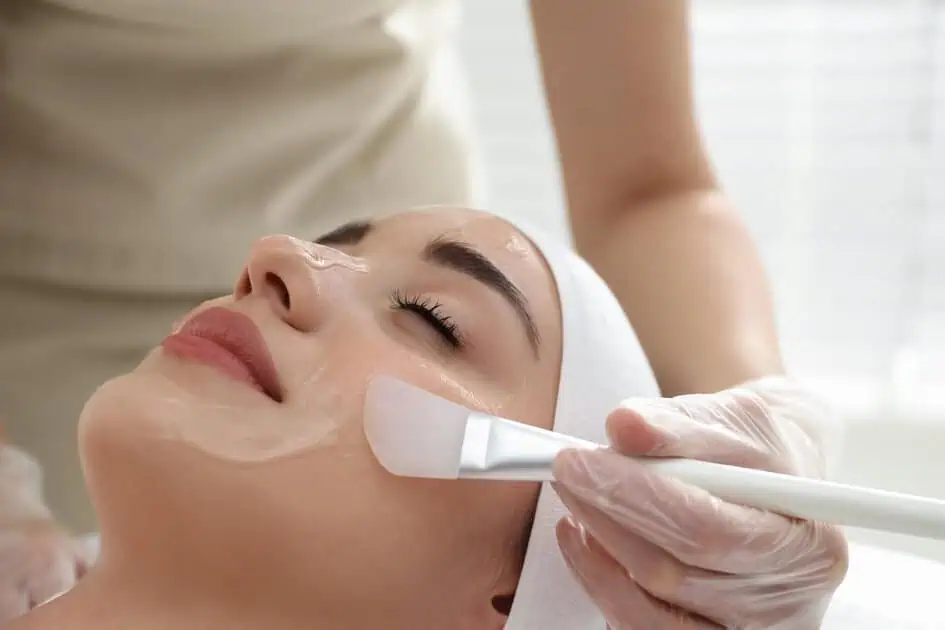
Table of Contents
You moisturize every morning. You switched to the thicker cream, the one that cost more than you wanted to spend. And by mid-afternoon, your skin still feels tight, looks dull, and flakes under your makeup anyway. That loop usually means the problem is not the product. It is what is happening underneath it. A professional facial helps because it treats the cause instead of the symptom.
Why does my moisturizer never seem to be enough?
Moisturizer alone often falls short because it sits largely on the surface without rebuilding the skin barrier underneath. A professional facial clears the dead skin cell buildup that blocks absorption, then applies hydrating formulas with humectants that draw water in and ingredients that help it stay there. Most clients leave feeling comfortable, though results vary, and barrier health typically improves over several appointments.
Dry Skin and Dehydrated Skin Are Not the Same Problem
Dry skin and dehydrated skin are two different issues, and knowing which one you have changes the entire approach. Dry skin lacks oil. It is a skin type, meaning your sebaceous glands (the oil glands attached to your hair follicles) produce less oil than your skin needs, and that’s often a lifelong trait.
Dehydrated skin lacks water. It is a condition rather than a type, so it is temporary, and it can happen to anyone, including people with oily or acne-prone skin. Yes, your skin can be greasy by noon and dehydrated at the same time.
A quick way to tell them apart: dryness feels rough and looks flaky, while dehydration feels tight and shows fine surface lines that reappear no matter how much moisturizer you apply. Most people have some degree of both, so the right treatment depends on an honest look at your skin first.
Why Your Skin Keeps Losing Moisture
Your skin loses moisture through transepidermal water loss, or TEWL, which simply means water evaporating out faster than it can be replaced. A healthy skin barrier holds that water in. A compromised one lets it go.
Most barrier damage is accidental. Cleansing too often, exfoliating too aggressively, long hot showers, and constant indoor heating all wear it down. Glen Burnie adds pressure on both ends of the calendar. Winter air here holds little humidity while the heat runs nonstop indoors, and Anne Arundel County summers bring heat and sweat that fool people into skipping moisturizer because their skin already feels damp.
What At-Home Products Can and Cannot Do
At-home moisturizers manage symptoms well, but they rarely rebuild barrier function on their own. Most over-the-counter creams sit largely on the surface, giving you a few hours of comfort without changing what is happening underneath.
There is also a mechanical problem. Dead skin cells build up and block absorption, so layering more product on top gets you less benefit, not more. The most common mistake is understandable: skin flakes, so people exfoliate harder to scrub them away, which further damages the barrier.
Consistent home care still matters. A dry skin facial works alongside it, not instead of it.
How a Hydrating Facial Treatment Restores Moisture
Which Facial Services Work Best for Dry or Dehydrated Skin
Every first appointment at The Vanity Room begins with a skin analysis that determines whether you are dealing with an oil issue, a water issue, or a barrier issue before choosing any products. From there, a few services suit this concern particularly well:
- A hydrating facial targets tightness and dullness directly, and many clients notice restored comfort and luminosity after a single session.
- A custom facial is formulated around your skin’s condition on the day of your visit rather than a fixed protocol, which helps when your skin shifts with the season.
- A dermaplaning facial removes dead skin cell buildup and fine vellus hair, improving how well hydrating products absorb, though it is not right for every skin at every stage.
Our full menu of facial treatments in Glen Burnie, MD walks through what each session involves.
What to Expect and How to Protect Your Results
Most clients feel a difference right away, usually softness and the absence of that tight, pulled feeling, though results vary depending on the condition of your skin when you arrive. Barrier function improves more slowly, typically over several appointments rather than one. Most clients return every four to six weeks to match the skin’s natural renewal cycle, and your provider adjusts the approach as the seasons change.
Aftercare protects what you just gained. For the first 48 hours, stick with a gentle, fragrance-free cleanser and moisturizer, and hold off on retinoids and exfoliating acids, especially after dermaplaning. Apply SPF daily, which is easy to underestimate during humid Maryland summers, and keep your water intake steady between visits rather than only on appointment days.
When Dryness Needs More Than a Facial
Some dryness points to something a facial cannot resolve. Persistent itching, redness, cracking, or patches that will not respond to consistent care may indicate a condition such as eczema (atopic dermatitis). An esthetician can improve comfort and barrier health but does not diagnose or treat medical conditions, and if your skin needs a dermatologist, we will tell you that plainly.
A skin analysis is a low-pressure place to start. Our licensed esthetician will look closely at what your skin is doing and talk through which approach makes sense for you, with no obligation to book anything further that day. Schedule a Facial Consultation whenever you are ready, and we will find a time that works.